


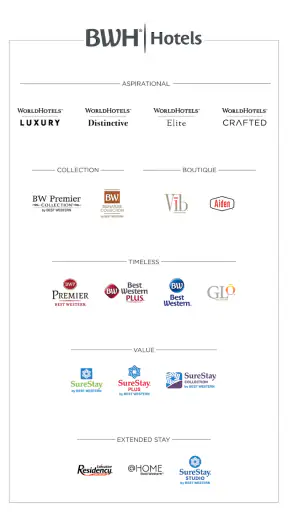
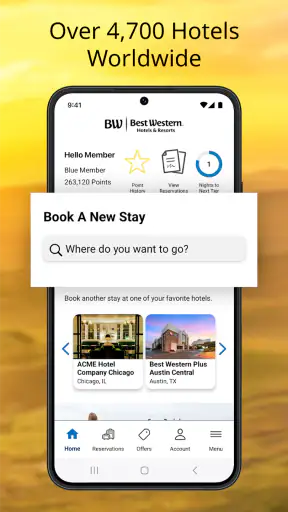
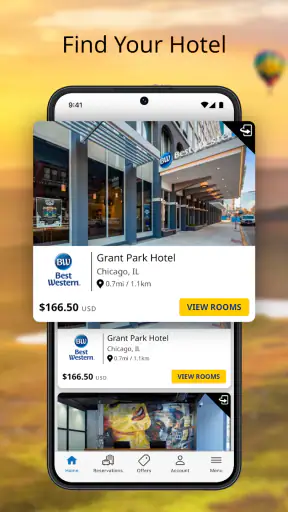
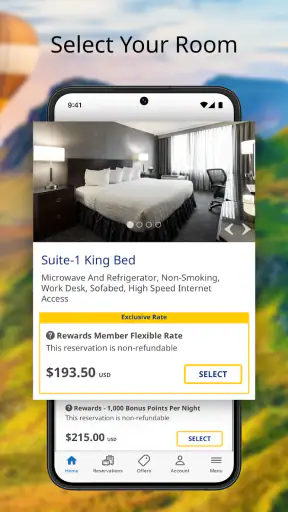
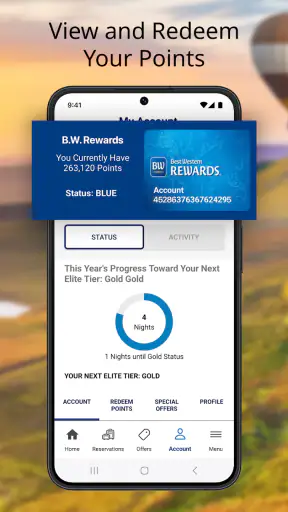
When I need to arrange a hotel stay without turning the process into a long research session, I prefer an app that keeps the booking path focused. Best Western To Go is built for that particular job: it is a free travel and local app from Best Western International Inc. that brings hotel booking and trip planning into one mobile experience. I found it most useful when I already knew I wanted to consider Best Western properties and needed a practical way to move from destination to reservation.
That distinction matters. This is not a universal travel marketplace where I can compare every hotel brand in one place. It is a brand-focused tool, and its value depends on whether that focus matches the way I plan trips. If I am choosing between Best Western locations, the app feels more direct than starting with a broad search engine. If I want the widest possible selection across independent hotels, hostels, rentals, and competing chains, I would use a different type of travel service alongside it.
How I decide whether Best Western To Go is worth installing
My first decision criterion is simple: do I regularly consider Best Western hotels? If the answer is yes, a dedicated app can remove unnecessary steps. Instead of searching the open web, filtering through unrelated properties, and then moving to a separate booking page, I can begin with the brand’s own travel channel. That makes the app especially sensible for repeat guests, road travelers, and people who already have a preferred hotel family.
The second criterion is the kind of trip I am organizing. For a single overnight stop, I care about speed, destination search, dates, and a clear reservation flow. For a longer journey, I want to think beyond one room and use the app as part of a broader plan. The store positioning presents it as a way to book hotels and plan trips worldwide, so I see it as more useful than a bare booking shortcut, although I would still keep a map or itinerary tool nearby for detailed route planning.
The third criterion is how much comparison I need before paying. A brand app is usually strongest when I have narrowed my choice to that brand. A general booking platform is usually stronger when I am comparing many chains and property types at the same time. I would not install this expecting it to replace every travel app on my phone; I would install it to make Best Western stays easier to manage.
It is also worth considering device compatibility before committing. The current version is 7.4.12, and the app requires at least iOS 9. That makes it accessible across a broad range of Apple devices, though anyone using an older phone should still check how comfortably the current interface runs on their particular hardware. The app is marked for Teen users, which is a normal fit for a travel booking tool rather than something designed specifically for children.
Its established presence is another practical signal. Best Western To Go has passed one million installs and carries a 4.4 average from around twenty-nine thousand ratings, with roughly two thousand nine hundred written reviews. I do not treat popularity as proof that every booking will be smooth, but those figures suggest that this is a mature, actively used app rather than an obscure experiment.
The booking workflow feels most useful when my destination is already decided
In my experience, the app makes the most sense at the moment when a vague travel idea becomes a concrete booking task. I might know that I am driving to a particular city on a particular night, or that I need a hotel near a destination I have already selected. In that situation, a focused hotel app avoids the distraction of browsing properties that were never realistic options.
I would begin by entering the destination and dates, then review the available Best Western choices with the practical questions that matter to me: location, room suitability, and whether the property fits the purpose of the trip. For a work visit, I care about reducing detours and arriving at a predictable place. For a family stop, I pay more attention to room details and the surrounding area. The app does not replace my judgment; it simply gives me a more direct starting point.
A useful habit is to search before I am under pressure. If I wait until I am already tired at the end of a long drive, I am more likely to accept the first acceptable result without checking the map or reading the booking details carefully. Using the app earlier lets me compare the available Best Western locations in the destination and decide whether the closest property is actually the best fit.
I also recommend reviewing the reservation summary slowly before confirming. Mobile booking encourages quick taps, especially when a room appears convenient. I would verify the dates, number of guests, room selection, and cancellation terms shown during the process. That is not a criticism unique to this app; it is simply the most important discipline when booking any hotel from a small screen.
Where the brand-focused approach wins
The strongest advantage is concentration. Best Western To Go does not ask me to navigate a huge universe of unrelated accommodation before I can reach the brand’s inventory. For someone who already trusts Best Western or has a reason to stay within that family, this can make the search feel less cluttered and more purposeful.
That focus is particularly valuable for repeat travel. If I frequently book the same chain, I already understand the general style of the properties and can spend my time comparing destination, dates, and room choices instead of learning a new platform every time. The app becomes a familiar route to a familiar type of reservation.
It can also be helpful for road trips with several hotel nights. I would not treat it as a complete navigation system, but I could use it to check lodging options in each stop, reserve the nights that need certainty, and keep the hotel portion of the trip organized in one brand environment. The non-obvious benefit here is consistency: using one hotel app for multiple stops can reduce the mental effort of switching between different booking accounts and interfaces.
Another strength is the relationship between discovery and booking. On a general travel site, I may compare a large number of properties, but that abundance can slow me down when I already know the brand I want. Here, the app’s narrower scope is not a weakness; it is the reason the process can feel quicker for the right user.
My main tip is to use the app as a focused decision tool, not as your entire trip-planning system. Let it handle Best Western hotel research and reservations, then use a map, calendar, or itinerary app for flights, driving times, attractions, and other providers. This division of labor is more efficient than forcing one hotel app to manage every part of a journey.
Small habits that make the app more useful
One practical workflow is to search twice: first by destination, then by the actual route or neighborhood that matters. A hotel listed under the same city can be inconvenient if it sits far from the meeting, venue, airport, or highway exit I need. I would use the first search to understand the available choices and the second pass to test whether the location works in real life.
For an early-morning departure, I would think about the next day rather than only the arrival night. A property that looks inexpensive or attractive may create a long transfer at dawn. Conversely, a slightly less central choice could be better if it places me near the road or area I need. The app helps me find the hotel options, but the best result still comes from connecting the search to my itinerary.
For family travel, I would avoid assuming that a familiar brand automatically means every property suits the same needs. I would inspect the room information and booking conditions presented for the specific location. This is a useful trade-off: the app can make brand selection easier, but it does not remove the need to evaluate each individual hotel.
For business travel, I would make the reservation before the workday becomes hectic and save the confirmation details in the way I normally keep travel records. A dedicated hotel app can shorten the booking process, but I still want a backup record in my email or calendar so that I am not dependent on opening the app at the front desk.
Where a broader travel alternative may fit better
I would choose a general hotel comparison service when the destination matters more than the brand. If I am visiting a city for the first time and want to compare Best Western with other chains, independent hotels, apartments, or hostels, a broader platform gives me a wider starting point. That wider view is useful when budget, neighborhood, or property style is still undecided.
I would also favor a general travel service when I am building a complex trip involving several accommodation providers. Switching between brand apps can become tiring, especially when one journey includes different hotel groups. In that case, the convenience of a single broad search and one consolidated planning space may outweigh the focused experience offered here.
For travelers who primarily rent homes, seek unusual lodging, or plan around attractions rather than hotel brands, Best Western To Go is unlikely to be the natural first choice. Its purpose is clearer and narrower. That is not a flaw, but it does mean I would skip it if my accommodation search begins with “what kind of place can I find?” rather than “which Best Western option works here?”
There is also a comparison trade-off. A dedicated brand app may make it easier to book within that brand, while an independent comparison service may make it easier to judge the brand against the market. I would use the latter for discovery and this app for a final Best Western booking when that is the direction I choose. That two-step approach takes a little longer, but it gives me both breadth and a brand-specific reservation path.
What switching to this app actually costs
The financial barrier is low because the app is free. The real cost is attention: installing another travel tool, learning its booking flow, and deciding whether it deserves a place alongside my existing map, airline, calendar, and hotel apps. For a person who books Best Western stays only once every few years, that setup may not be worthwhile. A mobile website or general booking service could be enough.
The larger cost is reduced flexibility. By choosing a brand-focused app, I am narrowing the search environment. That can save time when I know what I want, but it can also hide better-fitting alternatives from my first view. I would be comfortable with that trade if consistency and direct booking matter more to me than surveying the entire market.
There is a second switching cost for travelers who already have a carefully organized routine. If I use one broad platform to store every reservation, adding a separate hotel app may split my information across several places. I would solve that by copying confirmed dates and addresses into my main calendar immediately after booking. In other words, the app can handle the reservation while my calendar remains the central trip record.
I would also avoid changing tools in the middle of a complicated trip unless there is a clear reason. For a simple overnight stay, testing the app is low risk. For a multi-city journey, I would first decide how I want to track confirmations, changes, and transport. The best app is not necessarily the one with the most features; it is the one that leaves me least likely to miss an important detail.
Who should install it, and who should skip it
I recommend Best Western To Go to repeat Best Western guests, travelers who want a direct route to the chain’s hotels, and people planning road trips where dependable hotel research matters more than exploring every accommodation type. It is also a sensible option for anyone who prefers arranging the hotel portion of a trip from a dedicated brand app rather than a crowded marketplace.
I would be more cautious if I were extremely price-driven and willing to stay anywhere, because a broad comparison tool may reveal more possibilities. I would also skip it as my main travel app if my trips revolve around vacation rentals, hostels, boutique properties, or a mixture of many hotel brands. In those situations, the narrow catalog is likely to feel restrictive rather than convenient.
New users should expect to make their own final checks. A smooth app cannot tell me whether a hotel is close enough to my actual meeting, whether the room arrangement suits my group, or whether a reservation condition fits my plans. I see the app as a way to reduce booking friction, not as a substitute for reading the details.
My recommendation after using it as a decision guide
Best Western To Go earns a recommendation when the brand is already part of my shortlist. Its free price, mature presence, and focused approach make it a practical companion for booking Best Western hotels and organizing the lodging side of a trip. The current 7.4.12 release shows that the app remains maintained, while its broad iOS 9 requirement keeps it accessible to many Apple users.
My recommendation is conditional rather than universal: install it if you value a direct Best Western booking path, but keep a broader travel service available when comparison is your priority. I would use this app after deciding that Best Western is a serious option, not before I know what kind of accommodation or neighborhood I want.
After its release on November 2, 2010, the app has had plenty of time to become a recognizable part of the brand’s mobile travel offering. In practical terms, I would judge it less by whether it replaces every other travel tool and more by whether it helps me complete a Best Western reservation with fewer distractions. For that specific task, it is a useful, free choice; for open-ended travel discovery, a broader alternative will usually serve me better.
My clear verdict: Best Western To Go is worth keeping on my phone if I regularly stay with Best Western or want a straightforward way to plan its hotels around a trip. I would not recommend treating it as a complete travel planner, but within its intended lane it offers a sensible balance of focus and convenience.


